Forum explores funding for creative industries
Participants in the second Bayes Creative Industries Funding Forum identified practical steps to boost investment in the sector.
Investors, policymakers and regulators with vision can ensure British and European creative companies thrive in a rapidly-changing sector, participants agreed at a recent Bayes Business School conference.
Around 150 sector leaders, entrepreneurs, investors and finance experts attended the second Bayes Creative Industries Finance Forum last week.
Welcoming guests, Bayes’ Deputy Dean Professor Barbara Casu, said: “The creative industries are an increasingly important driver of economic growth, innovation and cultural influence. Ensuring that they have access to the right financial expertise, investment and international networks is therefore a challenge that deserves the attention of both industry and academia.”
The discussions sought to answer the question: “Why doesn't the creative economy have a dedicated investment asset class?”
Speaking at the conclusion of the event, Katherine Parsons, who leads the new Executive Master’s in Leadership for the Creative Industries programme at Bayes, said participants responded enthusiastically to that challenge.
“There was clear investor enthusiasm for the sector. While there are undoubted challenges – many around regulation and a paucity of data – we identified and highlighted practical actions to address or remove those barriers.”
Earlier, she had urged participants to be inspired by the continent’s long and rich history of myths and fables.
“Yes, this forum is about putting our heads together to explore how incredible creative industries move forward at a pivotal moment. However, we're also looking at how we take our stories, our European stories, into the future, because tales we're told as children are part of our shared culture, whether you're in London, Paris, Rome or Berlin.”
Below: Katherine Parsons welcomes guests and participants to Bayes.
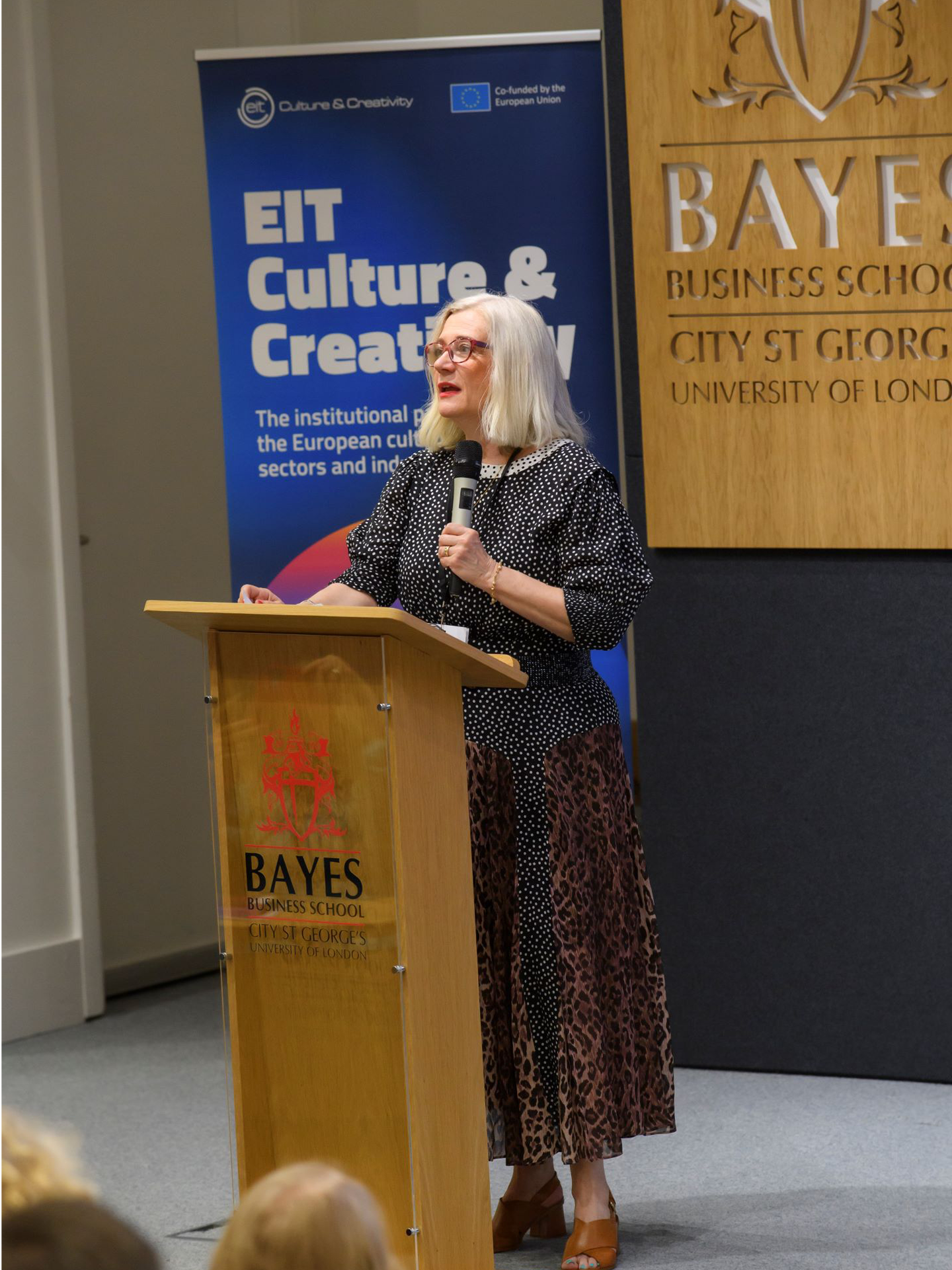
Pointing to Disney’s transformation of Cinderella, a European folk tale, into an economic powerhouse, she continued: “These stories don't disappear, they get reinterpreted and can turn into something with real long-term economic value. There is an infinite number of reinterpretations, and that's the point. Many scientific inventions become obsolete and technology moves on but good stories never expire."
Maria Rua Aguete, Senior Research Director (Media and Entertainment) at Omdia Informa, set out trends in an industry that is changing rapidly.
Referencing a recent comment by YouTube CEO Neal Mohan that his platform “is just getting started”, she said European companies need to form partnerships.
A fork in the road
“Broadcasters are at a crossroads and European companies have to find a route they can take so we are not relying only on U.S. companies. Things that were mobile, like YouTube, are now moving to TV, and companies that were on TV are moving to mobile. Content owners need to think carefully about how they make their content available.”
Victoria Fah, Investment Manager with IPR.VC, a fund that has backed Marty Supreme, which received nine nominations at the 2026 Academy Awards, took part in a panel discussion about how the “blockbuster economy” is changing investment across the creative industries and sport.
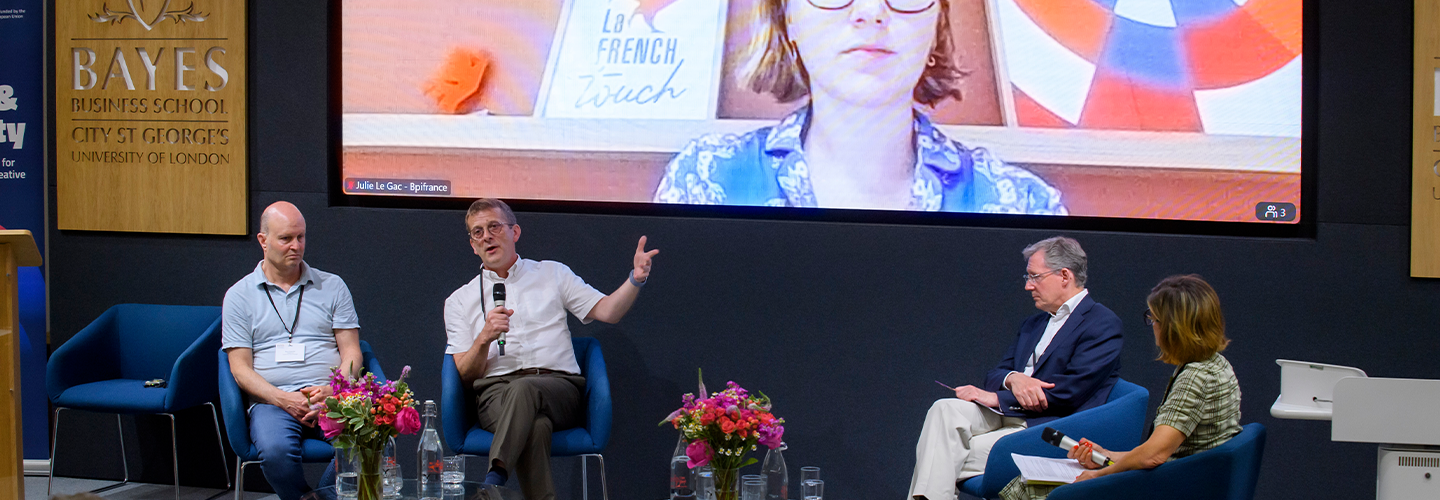
A panel discussion on the enduring role of public sector funding in the creative industries included contributions from Julie Le Gac, an investment professional with French Touch Capital, which is part of Bpifrance, the country’s public investment bank.
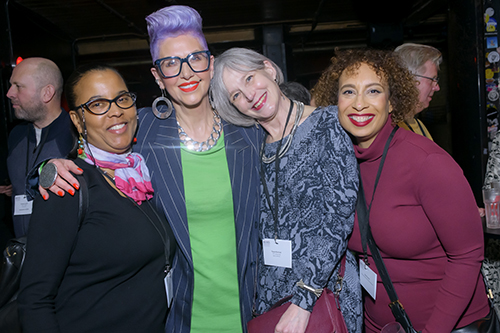
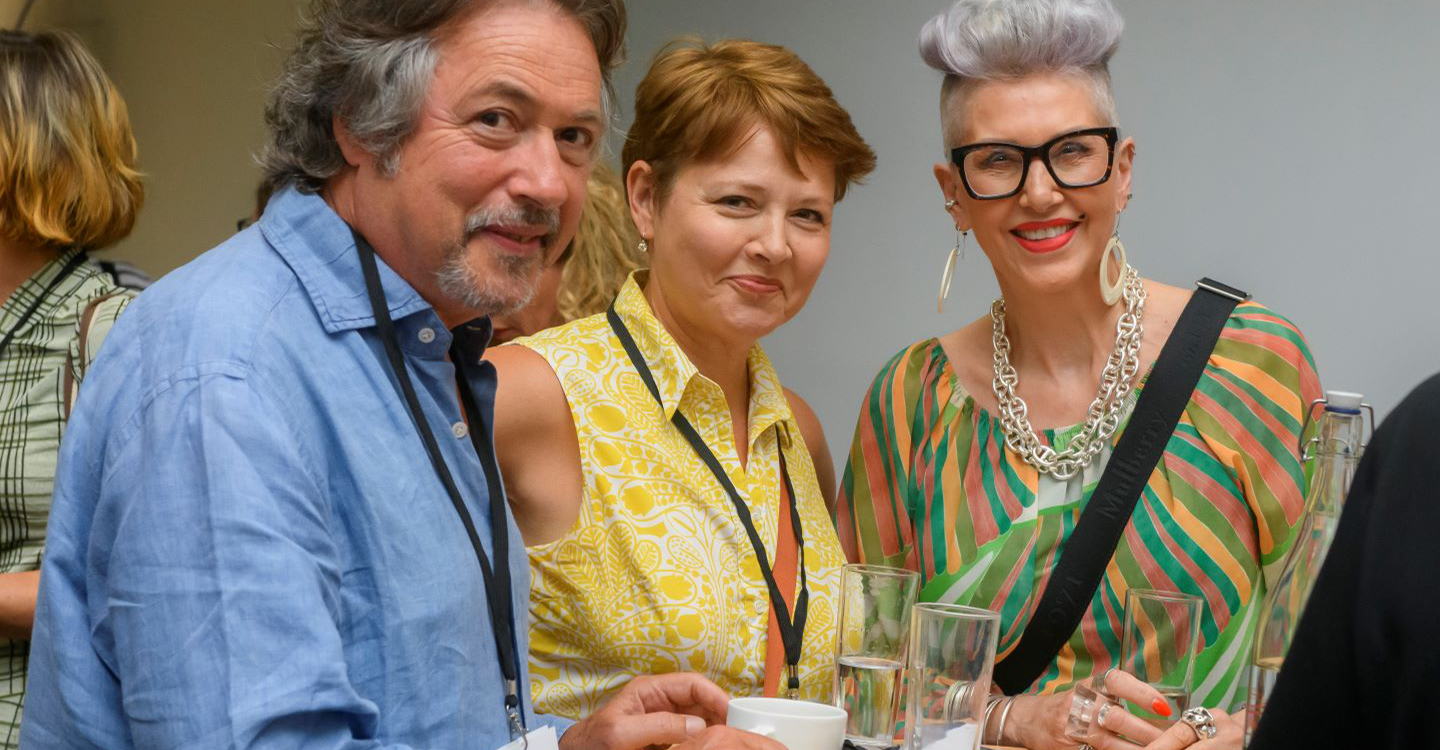
Below: Professor Amanda Goodall chatting with two guests.
Martin Goswami, the ITV executive responsible for strategic partnerships, distribution and commercial deals for ITVX and BritBox, took part in a panel discussion on platforms and market dynamics.
Tom Adeyoola, Executive Chair of Innovate UK, told participants that while many UK and European broadcasters benefit from “the long tail of their incredible content”, such revenues alone will not deliver the profits needed to reinvest in the industry.
Amanda Goodall, Professor of Leadership at Bayes who teaches on the programme said: “The creative industries contribute 5-6% to both the UK and EU economies. We achieved a lot today by drawing together shared insights from public and private sectors, academia and other expertise from the creative industries.
“Investors and creatives alike were able to see how institutional capital, cross-border investment and public finance can unlock growth. It was also important to learn from how the UK’s great financial services have financed the growth of other sectors such as infrastructure and biotech.”
The event was sponsored by EIT Culture & Creativity. The organisation’s CEO, Anette Schaefer, said: “Much of the value of firms in the creative sector lies in intellectual property, engaged communities, digital platforms and new business models. Yet these assets often remain difficult to translate into investment opportunities using traditional financial approaches.
“Creating a stronger investment ecosystem requires structural access to capital, new ways of looking at financial instruments and developing a shared understanding between creative entrepreneurs, investors, policymakers and industry.”
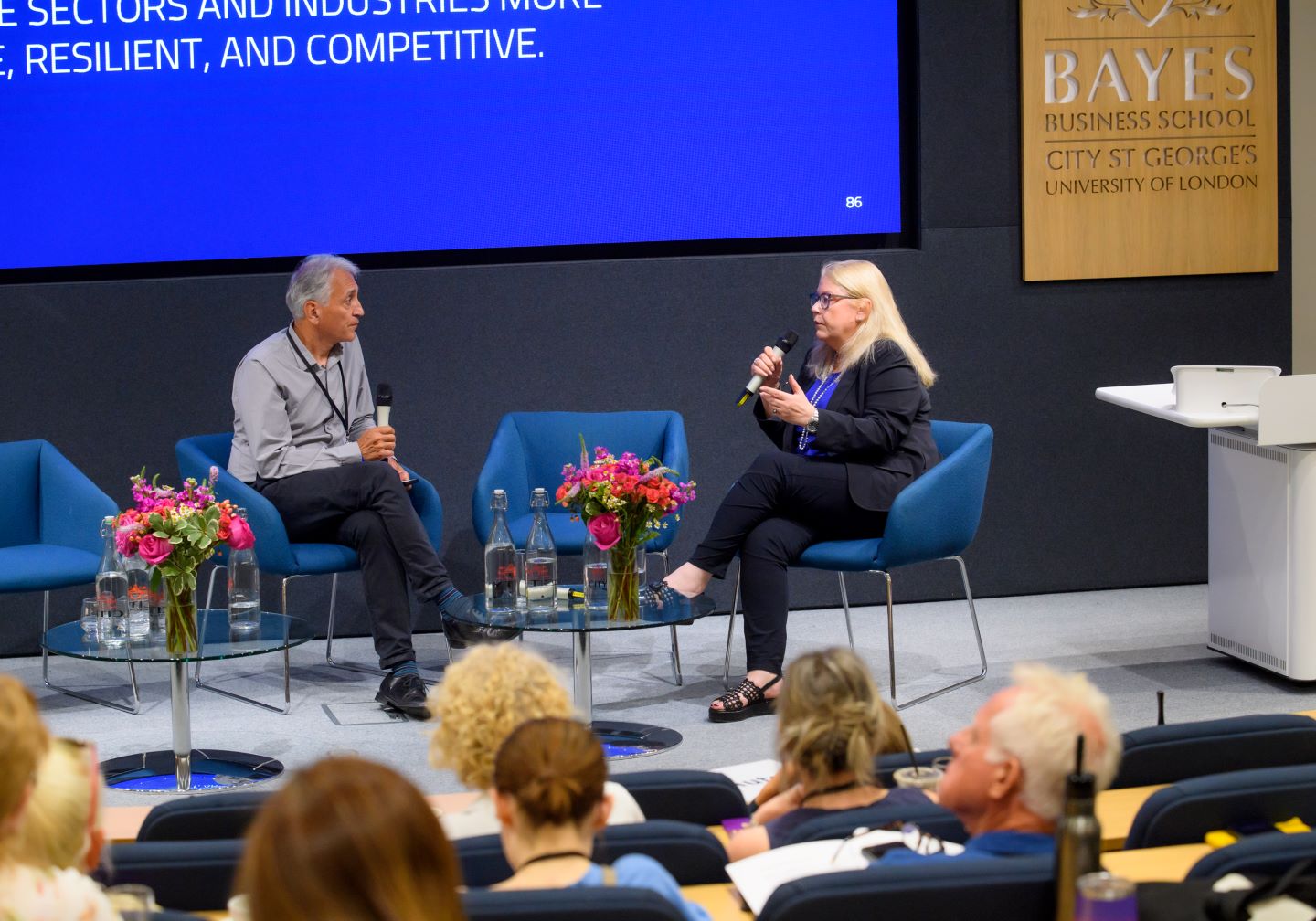
Below: Anette Schaefer speaks with Krishan Arora.