My journey through the Charities master’s programme in Voluntary Sector Management
From Leading a social impact consultancy in Asia to corporate philanthropy and a PhD—How the Bayes CCE Master’s in Voluntary Sector Management shaped Emily Perkin's journey.
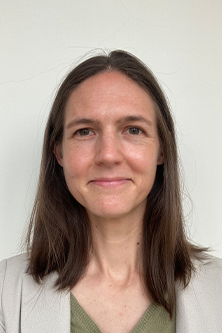 Hi, I’m Emily, and I completed the master’s programme in Voluntary Sector Management at Bayes Centre for Charity Effectiveness (CCE) in 2022.
The first ten years of my career were a bit of a romp through the worlds of: humanitarian aid (advocacy and research for NGOs/the UN); the UK public sector (measuring and forecasting health and education outcomes); and social enterprise (co-founding a housing start-up).
Then in 2013, I moved from London to Singapore and set up a consultancy focused on social impact measurement and strategy advice for charities and donors in Southeast Asia. The consultancy ran successfully as a social enterprise with a mission to support capacity-building in the sector.
I led that consultancy for around seven years and loved the work, but I increasingly felt that to take our services to the next level, I needed a deeper grounding in the knowledge and theories around voluntary sector management. So I started to explore courses that I could do alongside my day-job and came across Bayes CCE Charities master’s programme. At that time, I was also starting to consider moving back to the UK, so pursuing the Bayes course offered the extra benefit of giving me a way to get tapped back into things in the UK context. I enrolled during Covid, so the course was fully online and I was able to participate from overseas.
Just a few months after starting the CCE master’s programme, I received a surprise job offer to become the regional head of corporate philanthropy at a large multinational company. After some agonising, I took the job and closed down my consultancy. So the bulk of the programme then played out alongside my new role in a big corporation - a hugely different context from what I had originally expected.
My experience in the programme
The most valuable aspect of the programme for me was that it gave me a great snapshot of the latest issues and topics in the UK voluntary sector. It was also a fantastic opportunity to hear from a wide range of practitioners doing fascinating work across various parts of the sector.
At the same time, it encouraged me to explore different academic theories related to the sector and left me with an initial understanding of some of the main schools of thought across the syllabus. I’d also add that it helped me reflect on my own strengths and weaknesses - and encouraged me to see myself as someone who could be good at research and writing.
One particularly memorable assignment involved shadowing a voluntary sector leader and writing a report on their leadership style. I shadowed a hugely impressive woman running a fascinating organisation. It was such a privilege to sit in meetings as a fly on the wall and just observe what was going on. I loved it.
I was fortunate to have Dr Justin Davis-Smith as the leader of my Action Learning Set (mini peer group of students). Through his example and encouragement, I eventually took the plunge to quit my corporate job and join Bayes full-time on a PhD Fellowship. Thank you so much, Justin!
Advice and reflections
Be mindful of the workload. While the teaching weekends are one thing, but what really takes up time is the monthly assignments. If you can make the time, you can get a huge amount out of the course, but it is a significant commitment.
In my case, I worked extremely long hours during the first year in particular. In hindsight, it wasn’t sustainable, but putting in that level of effort did mean that I got the very most out of the programme, and I poured my heart and soul into the monthly assignments. One thing that really helped me keep going was the Action Learning Set peer group I joined as part of the course - it was a lifeline to feel that I belonged to such a lovely and inspiring group of people, each wrestling with work-life challenges in their own ways.
Also, I’d say you need to be ready for surprises. For example, I got a job offer out of the blue that completely changed the way that I had to juggle studying, working and home life. I guess the lesson learned is that when you embark on something like this, you can’t predict what will happen in your career or in your personal life. You just have to be ready to adapt.
Where next for me
I am now in the third year of a four-year PhD where I’m trying to rethink the way that "social impact" is measured and articulated, using case studies from corporate volunteering. Looking ahead, my current plan post-PhD is to return, in some way, to the consulting I was doing before. But now I am armed with stronger foundations to make sense of what I encounter and to challenge the status quo.
Find out more about the Centre for Charity Effectiveness (CCE) charities master's programmes.