
Vishwas Teerth
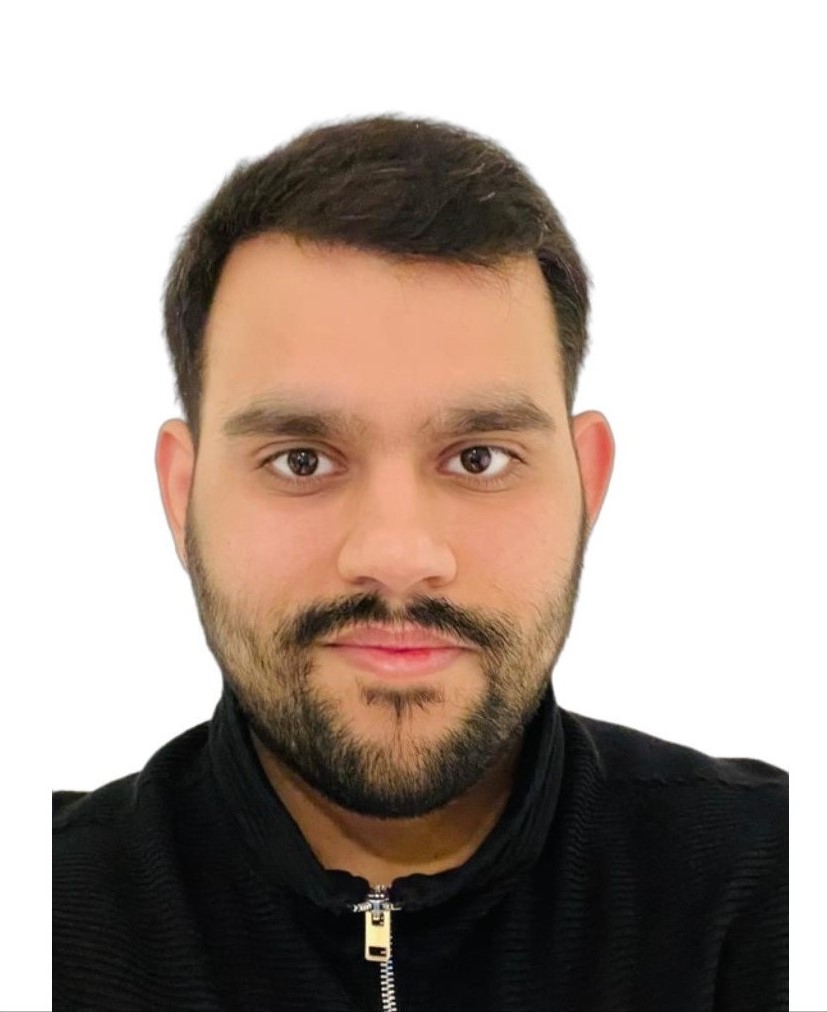
Nationality: Indian
MSc course: MSc Digital Supply Chain Management
Graduation year: 2023
“If you are looking to do something niche, go for a specialist master’s at Bayes.”
When you place an order with a food delivery firm, or buy an item with speedy next day delivery, you probably don’t think too hard about the processes behind it. You just want the item delivered on time, and in good condition. But Vishwas Teerth, graduate of the MSc Digital Supply Chain Management, is not just fascinated by those processes, he has made it his career.
“In India, I spent several years with a food delivery firm, managing strategy and supply chain operations. I had the practical experience, but I wanted to deepen my knowledge of the fundamentals and build formal skills. I was looking for advanced tools, techniques, and frameworks that could strengthen my decision-making.”
“I was looking specifically for a master’s in supply chain management. It is a specialist course and other universities I considered were primarily focused on operations management, but I was really looking for something dedicated to supply chains and procurement. I was already aware of Bayes and its reputation, as I knew a couple of colleagues who had done their MBA here and had really positive feedback about it.”
“I was brought up in India, and my main reason to relocate to London was to do my master’s. The UK has so much connectivity to global markets – it imports goods from all over the world, and I thought being here would really help me understand global supply chain concepts.”
Learning to think strategically
The MSc Digital Supply Chain Management is for students looking to make a career in a sector which works to ensure products and services reach customers at the right place and time. Students gain a solid understanding of the latest thinking and practices and build the knowledge to identify risks and opportunities. They learn how to think strategically, analytically and creatively about supply chain challenges, to advise organisations on managing them.
The master’s covers the vital skills required for this most global of sectors, including cultural sensitivity, self-awareness, effective business communication, time management and resilience. It is accredited by both the Chartered Institute of Procurement & Supply (CIPS) and the Chartered Institute of Logistics and Transport UK (CILT).
Over the course of 12 months, students learn the fundamentals of supply chains and analytics, and the management of business processes. They also consider current trends affecting the sector such as sustainability within supply chains, and machine learning for logistics.
Applying the learning inside and outside the classroom
“One of the modules I found most interesting was Supply Chain Analytics. I’m a data-driven person and that module taught me how to build statistical tools and models to identify the bottlenecks in a supply chain, and how to optimise them. It showed me how to spot a problem in a process flow – such as which process is taking too much time or producing less output than it should be. I learned that we can digitize everything – capturing all the unit values and the data needed to smooth out the procuring process and supply chain.”
“I gained firsthand exposure to industry challenges, including visiting a Five Guys restaurant to analyse their inventory planning and process bottlenecks. Seeing how issues like ingredient availability, staffing, or equipment can disrupt operations helped me understand the complexity behind even a simple meal. There are so many elements that can impact the smooth running of the restaurant, which the customer won’t see.”
Building a career in the UK
With the support of Bayes’ Careers Service, Vishwas adapted quickly to the UK market. He secured an internship at Sainsbury’s, then advanced to a full-time role as a Supply Chain Data Analyst after graduation. He later joined Marks & Spencer as a Supply Chain Planning Analyst, gaining valuable experience with two of the UK’s largest retailers.
Today, he is a Supply Chain and Procurement Analyst at Frive, a start-up delivering chef-prepared, nutritionist-approved meals.
“My role involves forecasting, monitoring stock, and building efficient procurement processes. If something is overstocked, I work with the menu planning team to adjust meals accordingly. It’s about creating a lean, flexible supply chain every day.”
His current work at Frive builds on his dissertation on food waste reduction. “I’ve developed an order optimisation model to balance stock levels, minimise waste, and prevent shortages. Applying that research to real-world challenges is incredibly rewarding.”
Reflecting on his professional journey so far, Vishwas shares: “I valued my time at Sainsbury’s and Marks & Spencer, where I gained invaluable insights into the structured processes of large organisations. At Frive, I’ve been able to leverage the skills acquired from the dynamic start-up environment, combined with my professional experience at these leading retailers and my academic training, to build processes from the ground up and drive measurable improvements in efficiency and sustainability.”
Getting the London experience
In coming to the UK, Vishwas uprooted his life in Panipat & Gurugram, India, and moved 4,000 miles to the other side of the world.
“I’ve been living in London for three years now, and I love the vibe. London gives you lots of opportunities in terms of events and seminars to really help you understand the industry and build a network. I’ve also explored outside of London with trips to Scotland and Wales, as well as hiking in the Surrey Hills.”
“Moving to London and starting a life here is not an easy thing – there are highs and lows, and you get to know your strengths and weaknesses. You learn a lot about yourself, and my emotional intelligence has really grown.”
Forecasting the future
“In the long-term I’m looking to create my own venture - something that solves a problem in the food industry. I’m figuring out what that looks like, perhaps something to do with ingredient procurement. In the meantime, I continue learning about the sector, gathering knowledge.”
“That entrepreneurial spirit was formed at Bayes. During the master’s I had the opportunity to go through the Enterprise Accelerator programme. My team pitched an idea about optimising unused spaces – places like pubs, bars and libraries, which could be used for office space – the idea was to give people the opportunity to work from anywhere – with facilities they need such as screens, chairs, desks etc. With the Accelerator programme you learn how a business starts, how to launch and find your first thousand customers. It was a real eye-opener.”
“None of this would have been possible without the constant support of my parents, who encouraged me both financially and emotionally. I’m especially grateful to my sister, who has always stood beside me and motivated me to keep learning and upskilling. I also want to thank my friends and extended family for their encouragement throughout.”
“My time at Bayes gave me the formal education I was looking for, and a fresh start in a new country, doing something I am passionate about.”