Finding the right path in business analytics as a beginner
Melisa Lara Denizoglu, a current MSc Business Analytics student at Bayes Business School, shares her passion for data and how Bayes has guided her as a beginner, setting her on the right path to a career in business analytics.
About Me: A Brief Introduction
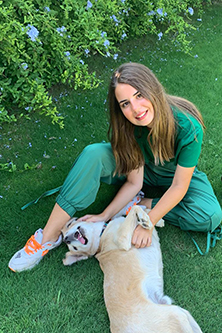
My name is Melisa Lara Denizoglu, a Turkish/German student of the MSc Business Analytics programme at the Bayes Business School. I anticipate graduating in January 2025.
Before enrolling at Bayes Business School, I completed my undergraduate degree in International Business Management at the University of Reading. I have always been passionate about international trade. During my undergraduate years, I was introduced to the world of data, and as I explored further, I recognised the immense potential for companies and career opportunities in this field. Even leading business media highlighted the significance of data; a 2017 report by The Economist stated that the world's most valuable resource is no longer oil, but data. I took electives in information systems and digital technology, which deepened my interest in data science roles. At the end of my undergraduate programme, I faced a decision: follow the path of many of my peers and get a job, or pursue a master's degree to further explore the data-driven landscape of modern business. I chose the latter, deciding to dive deeper into data science. This decision led me to Bayes Business School, right in the heart of London.
Finding the Right Master's Programme
During my search for the right master's programme, I carefully considered both job market demands and the technical skills offered by various programmes. After extensive research, I chose Bayes Business School because of its strong emphasis on highly technical skills, which aligned perfectly with the needs of current data science positions. Additionally, Bayes' distinguished reputation and diverse international opportunities were key factors in my decision. I was convinced from the start that joining Bayes would be a strategic investment in my future, setting me up for success in the data-driven world.
1. Taking the First Steps into Data Science: My Experience as a Beginner
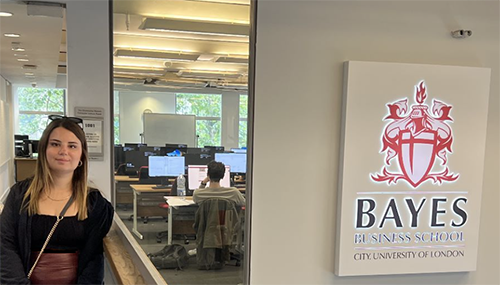
When I began my studies at Bayes Business School, I had absolutely no background in programming, which was initially quite intimidating. Everything about the data world was new to me, yet there was an undeniable excitement about stepping into this unknown area. Before our master's programme officially started, we took part in two weeks of mini-courses in Python and R, provided by our career centre. These courses were instrumental in equipping us with fundamental programming skills, ensuring we were well-prepared before the course began.
As the programme progressed, with regular study and practice, I steadily improved my skills in data science. We consistently used Python and R throughout our coursework, which was instrumental in helping me learn and apply these programming languages to real-time applications. Our assignments often involved creating reports based on statistical analysis from our data. This practice was invaluable in teaching us how to visualise, interpret, and communicate our findings, thereby equipping us for the professional challenges of the business world.
2. Professional Support: Getting the Right Information from Experts
Applying for jobs can be an incredibly stressful and significant milestone for students. Many of us pursue master's degrees to enhance the value of our education. Fortunately, the Bayes Career Team significantly alleviates this anxiety. This course was immensely helpful, offering insights into effective use of ChatGPT for interviews and cover letter creation, providing free LinkedIn Learning memberships, and guiding us on how to craft a compelling LinkedIn profile. Tips on preparing for interviews were also part of the curriculum, underlining Bayes' commitment not just to education but to supporting our employability post-graduation.
Within the first month, the careers team hosted a career fair, presenting us with a fantastic opportunity to network with companies from various sectors. We also attended a seminar led by alumni from our major, which deepened our understanding of the field. Throughout the year, the school organised numerous events with companies and workshops such as crafting cover letters. With one-to-one appointments, they took great care to assist us in preparing our cover letters and researching the job market. This comprehensive support greatly aided my job search; I tailored my CV and cover letter based on their advice and secured job applications in the UK. In my view, Bayes Business School consistently remains at the forefront of industry trends. They go the extra mile by pioneering the use of innovative technologies such as virtual reality (VR) to enhance students' interview and presentation skills.
3. A Global Network: Connecting with International Classmates
I am part of a class with students from all corners of the globe, each bringing unique perspectives and experiences to our master's programme. Despite our diverse backgrounds, we share common goals and aspirations. During our welcome week, we participated in various events that introduced us to our peers and included organised sightseeing trips around London. Our class comprises individuals who have studied subjects ranging from economics to engineering, mathematics to finance, and business management, among other disciplines. Some have just completed their bachelor's degrees, while others bring valuable work experience to our classroom discussions. Through collaborative group projects, we learn from each other, gaining insights that prepare us for the challenges of real-world business environments.
4. Living the London Life: Balancing Study and Exploration
 Living in London is like being part of an exclusive club where every corner tells a story of history meeting modernity. As a student, it's fascinating to witness iconic landmarks standing tall alongside cutting-edge businesses, reflecting the city's dynamic blend of tradition and progress. The city never sleeps. Fuelled by a diverse population from around the world, the vibrant atmosphere enriches my daily life, offering endless opportunities for cultural exploration and connection. Whether I'm indulging in world-class theatre at the West End, uncovering hidden culinary treasures, or simply relaxing with friends in Hyde Park after exams, London constantly inspires and surprises me. While moments of homesickness may arise, the city's diverse culinary scene serves as a comforting reminder of home. Living in London as a student is an exhilarating journey of self-discovery and limitless possibilities, where each day brings new adventures and opportunities for personal and professional growth.
5. Defining My Career Path: From Uncertainty to Clarity
Before enrolling in my master's programme, I was uncertain about my career path. However, the programme's emphasis on platforms like LinkedIn and effective job research methods, along with various career events, provided me with clarity and opened up new possibilities. The programme wasn't just theoretical; it included coursework and an applied research project with Fiat, offering invaluable hands-on experience. Through this real-world project, I honed essential skills in data analysis, problem-solving, communication, and teamwork. This practical experience has prepared me well for my next step.
In the short term, I aim to transition into a Business Analyst role within an international energy company, leveraging the skills I've acquired from my MSc in Business Analytics. Looking ahead, I aspire to become an expert in the field, actively seeking creative opportunities to make a lasting impact and contribute significantly to the industry.